Choosing the right technology for a business website affects how it is built, updated, maintained and expanded over time.
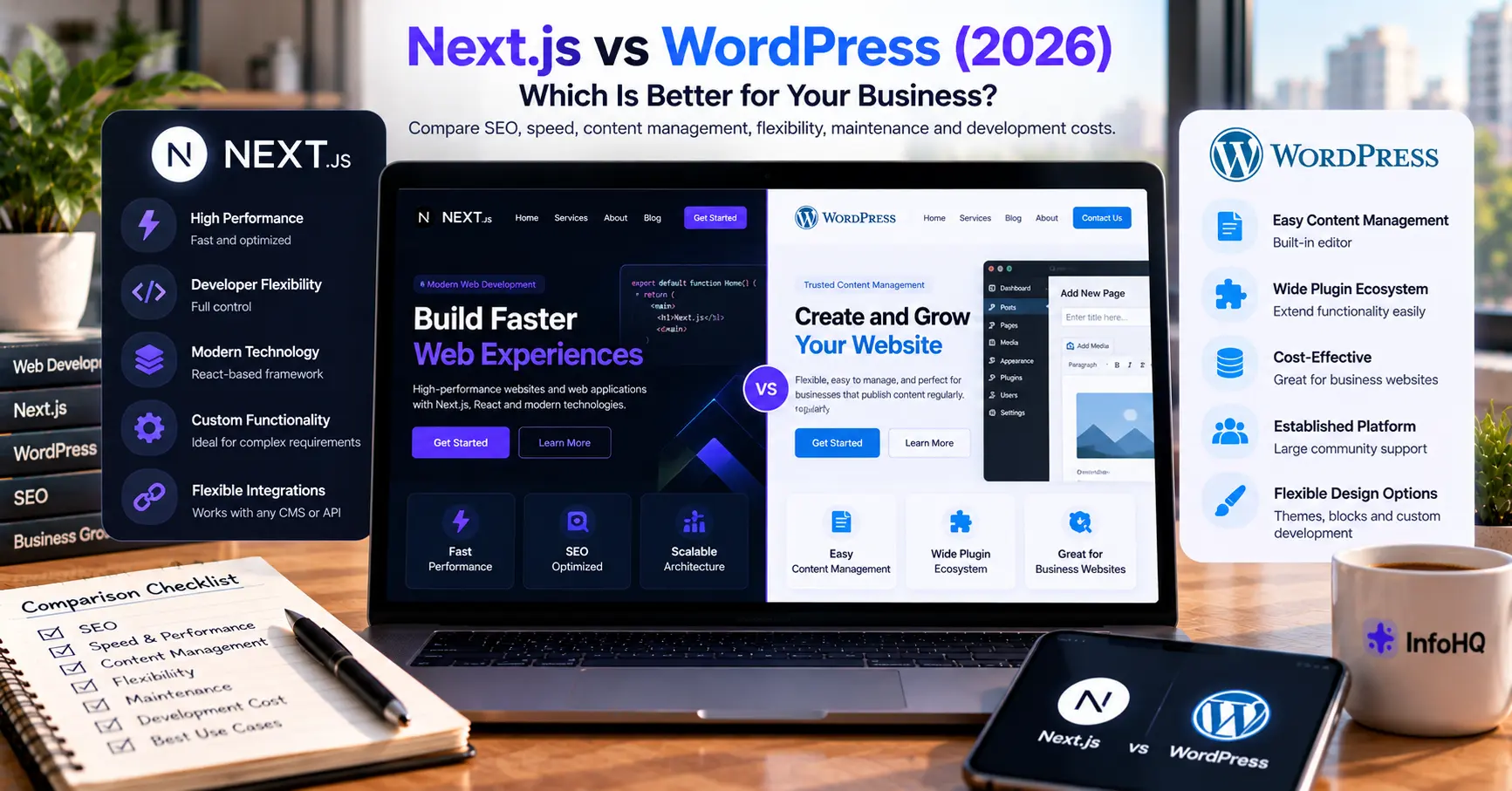
WordPress is a content management system designed to make publishing and managing a website accessible. Next.js is a React framework that gives developers more control over application architecture, rendering and performance.
Neither is automatically better for SEO. A well-built website on either platform can perform well in search when its content, technical implementation and user experience are strong.
Next.js vs WordPress: Quick Comparison
| Factor | Next.js | WordPress |
|---|---|---|
| Best suited for | Custom websites and web applications | Content-driven websites and business publishing |
| Content editing | Depends on the CMS or editing system used | Built-in content management and editor |
| Design flexibility | High developer control | Themes, blocks, plugins and custom development |
| Performance | Strong optimisation options, but depends on implementation | Can be fast with suitable hosting and optimisation |
| SEO | Supports metadata and rendering strategies | Supports SEO through core features and suitable plugins |
| Maintenance | Framework, dependencies, deployment and code | Core, theme, plugin, hosting and security updates |
| Skills needed | React and web development expertise | Can be managed with limited coding, depending on setup |
| Initial cost | Depends on the scope of custom development | Often economical for standard content websites |
1. SEO: Which Platform Is Better?
Both platforms can support the essentials of SEO: descriptive titles, meta descriptions, crawlable links, canonical URLs and structured data.
Next.js provides a Metadata API for defining page titles, descriptions and social sharing metadata. See the Next.js Metadata documentation. WordPress handles much of this through its content features and can be extended with SEO plugins.
The real difference is implementation. A Next.js site can still have poor metadata or crawlability, while a properly maintained WordPress site can be technically sound and search-friendly. Google’s guidance on creating helpful content applies to both.
SEO verdict: Choose the platform your team can implement and maintain correctly. Neither platform guarantees higher rankings.
2. Website Speed and Performance
Next.js offers features such as code splitting, rendering options and image optimisation that can help developers build efficient websites. The result still depends on the code, assets, hosting and third-party scripts.
WordPress performance depends on theme quality, plugins, caching, hosting, image sizes and page design.
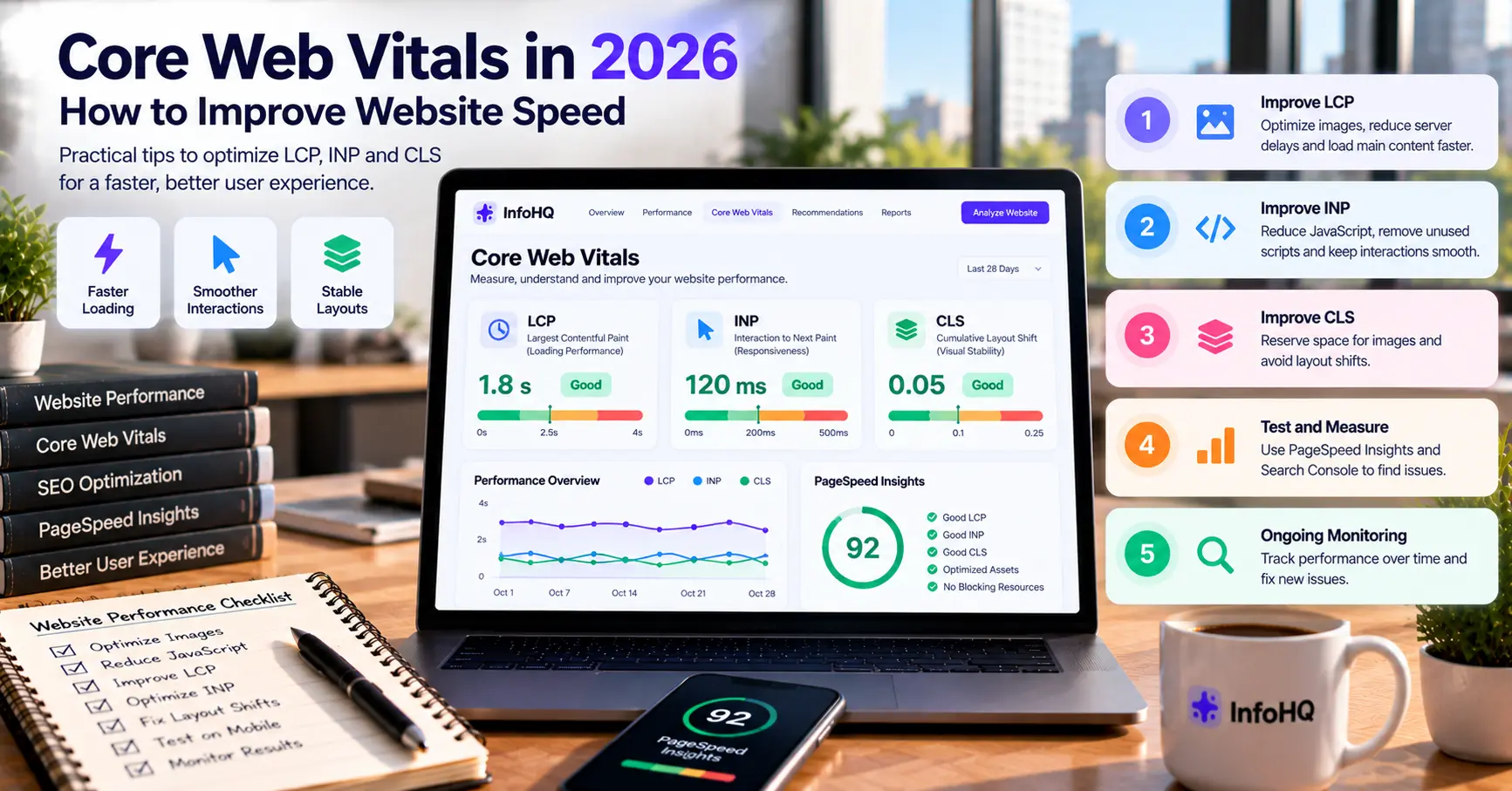
A lightweight WordPress site can outperform a poorly built Next.js site. Measure real performance instead of assuming a platform is faster. Our guide to improving Core Web Vitals shows how.
3. Content Management and Ease of Use
WordPress is often a practical choice for businesses that publish blogs regularly, update service pages, or manage content without developer involvement.
Next.js is very flexible for custom interfaces, but an editor-friendly publishing experience may need a CMS integration or a custom admin system.
If non-technical staff need to publish content daily, make the editing workflow part of the initial requirements.
4. Cost and Maintenance
WordPress may be more economical for a standard company website because of its established publishing workflow and the many themes and plugins available.
Next.js may be a better investment when the business needs custom interactions, tailored integrations or application-like functionality.
Neither has a universal price advantage. Compare development, hosting, updates, security, content management and future changes over the expected life of the website. For typical budgets, see website development cost in India.
Which Should You Choose?
Choose WordPress if:
- Your main priority is publishing content and managing pages.
- Your team needs an established editor.
- Your requirements fit available themes and plugins.
- You want a conventional business website or blog.
Choose Next.js if:
- You need a highly customised user experience.
- The website includes application-like functionality.
- Your team can maintain a custom codebase.
- You need specific rendering, integration or performance strategies.
For some businesses, a headless CMS with Next.js can combine structured content management with a custom frontend. It also adds more components to build and maintain.
Frequently Asked Questions
Is Next.js better than WordPress for SEO?
Not inherently. Both can support SEO. Content quality, crawlability, performance, internal linking and correct metadata matter more than the framework name.
Is WordPress cheaper than Next.js?
It can be for standard content websites, but the cost depends on design, plugins, hosting, integrations and maintenance. Custom WordPress development can also become expensive.
Can Next.js be used for a blog?
Yes. It can power a blog, but you need a suitable publishing workflow, which may involve files, a database or a content management system.
Can a WordPress website be fast?
Yes. Suitable hosting, a lightweight theme, efficient assets, caching and careful plugin selection can support good performance.
Does InfoHQ build websites for businesses in Pune and Prayagraj?
InfoHQ is headquartered in Prayagraj, with operations also in Pune, and builds websites for businesses across India. We deliver remotely to clients anywhere in the country.
Final Thoughts
Choose WordPress when content publishing and straightforward site management are your main priorities. Choose Next.js when custom functionality and developer control are central to the project.
The best business website meets your users’ needs, supports your marketing goals and stays maintainable as your company grows.
Need help choosing your website technology? InfoHQ is an AI and software engineering studio headquartered in Prayagraj, with operations also in Pune. We help businesses across India plan and build websites and web apps. See our web development service, our mobile app development service, or contact us.