Understanding health information is not always easy.
A person experiencing a sudden fever, headache, or unusual fatigue often struggles to understand what those symptoms could mean. Laboratory test reports present another common hurdle: they contain dense technical terminology, numerical values, and reference ranges that are difficult for someone without medical training to decipher.
Searching the public internet frequently compounds this problem. Information is scattered across medical portals, forums, and unverified blogs, making it difficult to determine which insights are credible, relevant, or applicable.
This creates a clear engineering opportunity: how can modern AI, natural language processing, and mobile technology make preliminary health information accessible, structured, and easy to understand?
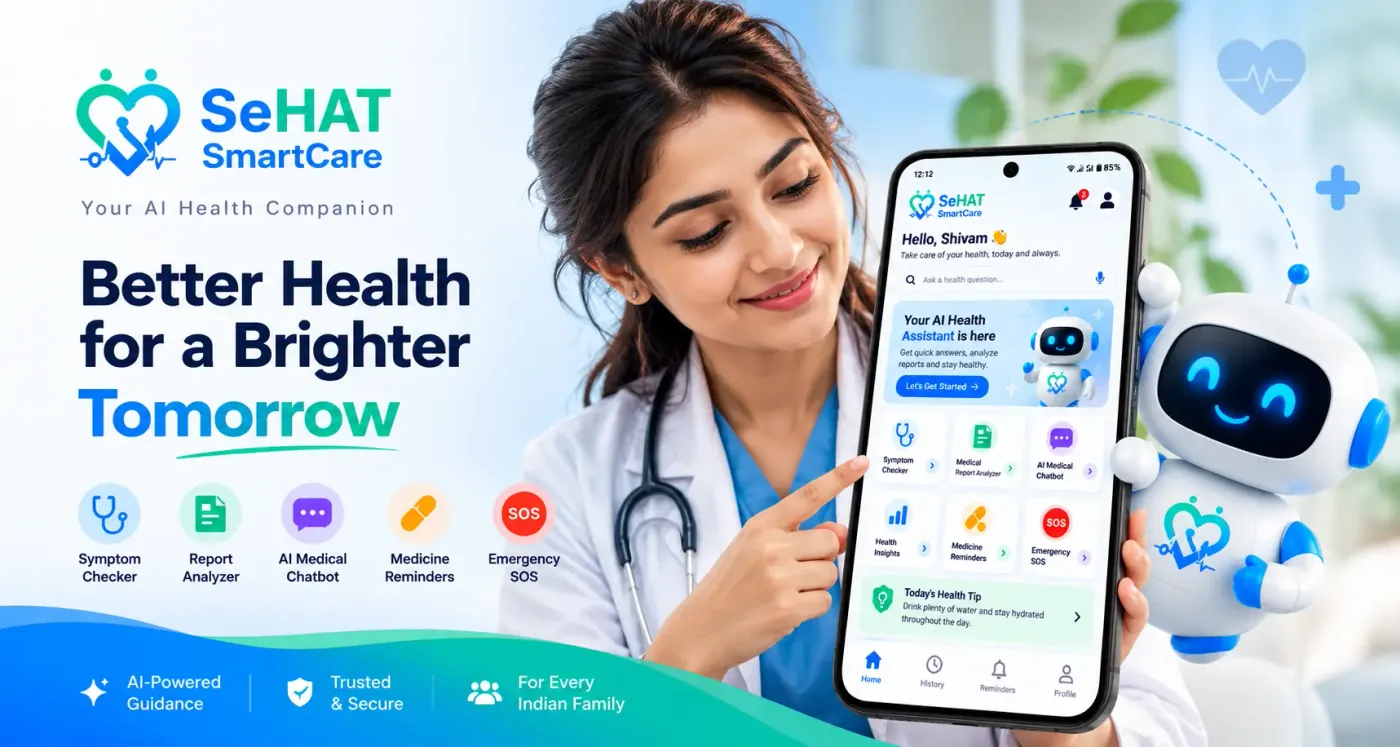
SeHAT SmartCare AI (Smart e-Health Assistance Technology) is an AI-powered Android healthcare assistant developed to bring several essential health-information workflows into a single, unified mobile application.
Figure 1: SeHAT SmartCare AI — Android-based Healthcare Assistance Application combining Medical LLMs and RAG.
The application combines:
- AI-assisted symptom analysis using semantic search.
- Optical Character Recognition (OCR) for medical report text extraction and laboratory parameter explanations.
- A multilingual conversational AI medical chatbot powered by Retrieval-Augmented Generation (RAG).
- Domain-specific medical language model inference using II-Medical-8B.
- Multilingual voice-based interaction supporting English, Hindi, and Hinglish.
- Routine wellness features, including daily health insights and local medicine reminders.
- Emergency assistance with automated SOS messaging and India’s national emergency helpline (112) integration.
Instead of treating each feature as an isolated utility, SeHAT SmartCare connects native Android interfaces with a high-performance Python/FastAPI AI backend and scalable cloud services.
Important Medical Notice:
SeHAT SmartCare AI is strictly an informational and assistance platform. It is not a diagnostic medical device and does not replace qualified healthcare professionals, clinical medical diagnoses, prescribed treatments, or emergency healthcare services.
1. The Core Problem: Why Build an AI Healthcare Assistant?
Developing an effective AI healthcare assistant requires understanding the exact user friction points it seeks to solve. SeHAT SmartCare was architected around three fundamental real-world challenges:
1.1 Understanding Symptoms in Natural Language
People rarely describe physical discomfort in textbook clinical terms. Instead of saying “rhinorrhea and acute cephalalgia,” users express symptoms colloquially:
- “I have a severe headache and feel exhausted.”
- “Mujhe do din se bukhar aur body pain ho raha hai.”
- “Sore throat, mild dry cough, and burning eyes.”
The technical challenge is to parse these varied, multi-lingual natural language descriptions and match them with semantically relevant health literature—without prematurely jumping to an inaccurate medical diagnosis.
1.2 Demystifying Laboratory Reports
A typical Complete Blood Count (CBC) or metabolic profile lists dozens of parameters:
- Haemoglobin (Hb)
- White Blood Cell Count (WBC)
- Platelet Count
- Fasting Blood Sugar / HbA1c
- Serum Creatinine & Bilirubin
Reports display raw numbers alongside reference intervals (e.g., 13.5 – 17.5 g/dL). Patients often do not know what each biomarker represents, or panic when a single number is slightly outside the stated reference interval. A report analyzer extracts these parameters and explains medical terminology in plain language, helping users prepare informed questions for their consulting doctor.
1.3 Fragmented, Overwhelming Online Information
Generic web search engines return millions of conflicting links, ranging from basic wellness tips to worst-case scenarios. A focused conversational assistant backed by verified retrieval sources allows users to ask specific questions naturally and receive structured, coherent context.
2. What Is SeHAT SmartCare AI?
SeHAT SmartCare AI is an end-to-end, mobile-first healthcare platform that unifies natural language processing, vector similarity search, computer vision, and cloud infrastructure.
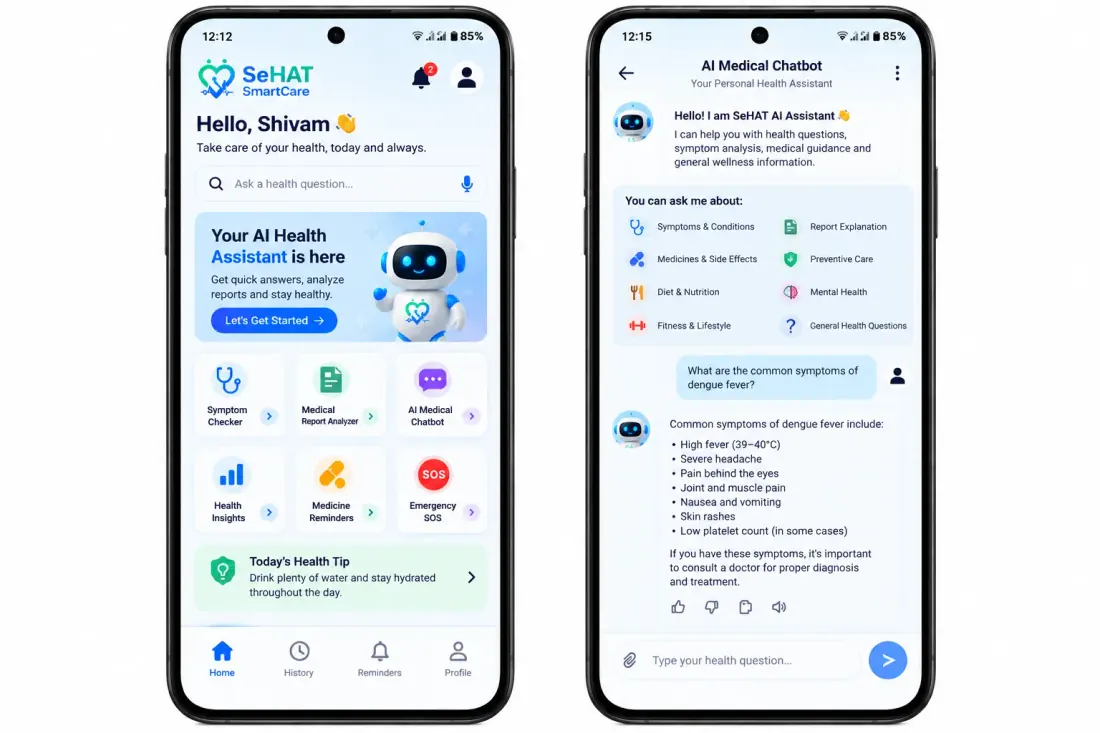
Figure 2: Native Android Interface — Main Health Dashboard and Conversational AI Medical Assistant.
Application Feature Matrix
| Module | Primary Technical Purpose | Key Underlying Technology |
|---|---|---|
| AI Symptom Checker | Semantic matching of natural language symptoms | SentenceTransformers, FAISS Vector Index |
| Medical Report Analyzer | OCR text extraction and parameter interpretation | Tesseract / Vision OCR, Structured Parsing |
| AI Medical Chatbot | Context-grounded health Q&A | RAG Pipeline, II-Medical-8B LLM |
| Voice Input Engine | Hands-free speech-to-text queries | Android SpeechRecognizer (Hindi, English, Hinglish) |
| Daily Health Insights | Self-reported wellness metrics and lifestyle scoring | Local SQLite / Room DB, Wellness Algorithms |
| Medicine Reminders | Scheduled dosage alerts and adherence tracking | Android AlarmManager, NotificationManager |
| Emergency SOS | Rapid alert dispatch with GPS coordinates | Android Location Services, SMS / WhatsApp Dispatch |
| User Authentication | Secure account identity and access control | Firebase Authentication (JWT Tokens) |
Interactive Showcase: You can inspect the application workflows, including the home dashboard, symptom matching screen, OCR scanner, and reminder system, directly in the InfoHQ SeHAT SmartCare Project Showcase.
3. AI Symptom Checker: From Natural Language to Health Context
The Symptom Intelligence Engine enables users to describe discomfort in conversational sentences rather than forcing them to navigate rigid dropdown menus of clinical jargon.
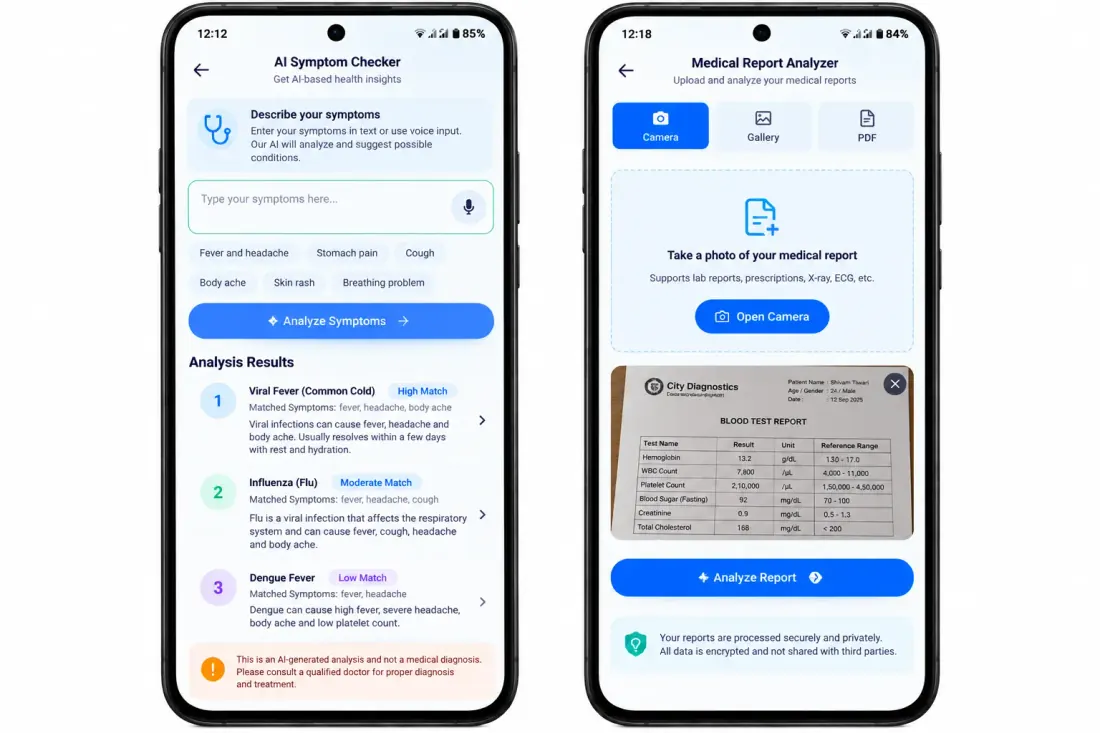
Figure 3: Symptom Checker results screen with matched health information and document OCR scanner.
Step-by-Step Symptom Processing Pipeline
- User Input: The user enters symptoms via text or voice (e.g., “Persistent fever for 3 days with dry cough and mild body chills”).
- Text Normalization & Entity Extraction: The input text is cleaned, tokenized, and normalized to identify core symptom entities.
- Dense Vector Embedding: Using
SentenceTransformerswith theall-MiniLM-L6-v2model, the normalized symptom text is transformed into a 384-dimensional dense numerical vector. - FAISS Similarity Search: The vector is queried against a pre-indexed FAISS (Facebook AI Similarity Search) vector space containing structured symptom-disease associations from verified medical databases.
- Score Calculation & Ranking: The system computes the cosine similarity between the query embedding and stored vectors, ranking top matches.
- Structured Presentation: The application displays related health conditions along with clear descriptions, potential questions to ask a doctor, and red-flag warning indicators.
Understanding Similarity Scores vs. Clinical Diagnosis
The symptom checker returns illustrative semantic similarity scores, such as:
- Viral Infection / Influenza: 72% Match
- Acute Bronchitis: 64% Match
- Allergic Rhinitis: 48% Match
It is critical to understand what this percentage means: it is a mathematical vector similarity score, NOT a clinical diagnosis or disease probability. It indicates how closely the user’s phrasing resembles literature describing that condition. Highlighting this distinction is an essential ethical requirement in digital health engineering.
4. Medical Report Analyzer: Processing Documents with OCR and AI
Medical reports are often stored as paper printouts, low-resolution camera photos, or scanned PDFs. The Medical Report Analyzer bridges the gap between paper documents and digital understanding.
┌────────────────────────────────────────────────────────────────────────┐
│                   MEDICAL REPORT ANALYZER PIPELINE                     │
├────────────────────────────────────────────────────────────────────────┤
│                                                                        │
│   [ Patient Document ]                                                 │
│   (Image / PDF Upload)                                                 │
│           │                                                            │
│           ▼                                                            │
│   [ Pre-processing Engine ] ──► Grayscale, Deskew, Contrast Correction │
│           │                                                            │
│           ▼                                                            │
│   [ OCR Extraction Layer ] ──► Converts visual characters to text      │
│           │                                                            │
│           ▼                                                            │
│   [ Parameter Parser ] ──────► Regex & NLP identify:                   │
│                                • Test Name (e.g. Haemoglobin)          │
│                                • Observed Value (e.g. 11.2)            │
│                                • Unit (e.g. g/dL)                      │
│                                • Lab Reference Range (13.5 - 17.5)     │
│           │                                                            │
│           ▼                                                            │
│   [ Range Comparison ] ──────► Identifies in-range vs out-of-range     │
│           │                                                            │
│           ▼                                                            │
│   [ AI Explanation Layer ] ──► Generates plain-language summary &      │
│                                questions for consulting physician      │
└────────────────────────────────────────────────────────────────────────┘
Complete Blood Count (CBC) Analysis Example
When a user uploads a routine Complete Blood Count report, the analyzer parses and categorizes the key metrics:
| Parameter | Observed Value | Standard Reference Range | Status | Plain-Language Explanation |
|---|---|---|---|---|
| Haemoglobin (Hb) | 11.2 g/dL | 13.5 – 17.5 g/dL | Below Range | Measures oxygen-carrying protein in red blood cells. Lower levels may correlate with fatigue or anaemia. |
| White Blood Cells (WBC) | 7,400 /µL | 4,500 – 11,000 /µL | Normal | White blood cells defend against microbial infections. |
| Platelet Count | 210,000 /µL | 150,000 – 450,000 /µL | Normal | Blood cells responsible for clotting and wound healing. |
| RBC Count | 4.1 M/µL | 4.5 – 5.9 M/µL | Below Range | Total circulating red blood cell volume. |
Realities of OCR Accuracy in Digital Health
Optical Character Recognition is subject to real-world edge cases:
- Blurry camera captures or uneven room lighting.
- Crinkled, folded, or stained physical papers.
- Misidentified decimal points (e.g., reading
1.12as112or11.2). - Laboratory-specific layouts and multi-column tables.
To mitigate errors, SeHAT SmartCare implements a human-in-the-loop review step: extracted numerical values are presented alongside cropped image snippets of the original document so users can verify accuracy before reviewing the explanation.
5. AI Medical Chatbot: Conversational Q&A Grounded in RAG
Standard language models (such as base GPT or Gemini) are trained on general internet text. In healthcare contexts, relying purely on parametric memory introduces two significant dangers: hallucinations (confidently stating incorrect medical facts) and outdated clinical data.
To prevent hallucinations, SeHAT SmartCare implements a Retrieval-Augmented Generation (RAG) pipeline.
User Question: "What causes elevated serum creatinine?"
      │
      ▼
[ Query Embedding: all-MiniLM-L6-v2 ]
      │
      ▼
[ FAISS Vector Index ] ──► Fetches verified clinical context on renal function
      │
      ▼
[ Structured Prompt Builder ]
  - System: You are a medical information assistant.
  - Context: [Verified medical excerpt on kidney filtration and creatinine]
  - User Query: "What causes elevated serum creatinine?"
  - Guardrail: Provide educational context only. Direct to a nephrologist/physician.
      │
      ▼
[ Medical LLM: II-Medical-8B ]
      │
      ▼
Clear, grounded explanation delivered to Android interface.
Advantages of RAG in Healthcare Applications
- Grounded Answers: Responses reference specific, retrieved excerpts rather than relying on unconstrained generation.
- Updatable Knowledge Base: Clinical guidelines, reference ranges, and seasonal health alerts can be updated in the vector database without costly model fine-tuning.
- Traceability: The system can cite verified educational references alongside answers.
- Safety Boundaries: If the vector database finds no reliable context matching an unusual medical query, the model explicitly states that it lacks verified information and recommends consulting a doctor.
6. Medical Language Model: II-Medical-8B
At the inference core of SeHAT SmartCare is II-Medical-8B, a specialized healthcare foundation model developed by Intelligent Internet.
Technical Specifications
- Base Architecture: Built on
Qwen3-8B, combining efficient attention mechanisms with dense multi-layer transformers. - Domain Specialization: Supervised Fine-Tuning (SFT) and Direct Preference Optimization (DPO) on curated medical textbooks, clinical literature, and benchmark medical datasets.
- Benchmark Performance: Evaluated on standard medical evaluation benchmarks:
- MedQA (USMLE-style questions)
- PubMedQA (Biomedical research reasoning)
- MedMCQA (Multi-specialty medical entrance exams)
- Reported benchmark average: 70.49% across standardized medical question-answering tasks.
Why Deploy a Dedicated Medical Model?
While general LLMs perform well in creative writing or coding, domain-adapted medical models demonstrate superior comprehension of:
- Complex pharmacological interactions and contraindications.
- Anatomical and physiological terminology.
- Laboratory biomarker units and medical abbreviations.
- Sensitive, empathetic health communication nuances.
Reference: II-Medical-8B Model Card on Hugging Face
7. FAISS Vector Database & Semantic Knowledge Indexing
For high-speed retrieval over thousands of medical documents, SeHAT SmartCare utilizes FAISS (Facebook AI Similarity Search).
Knowledge Indexing Workflow
- Document Curation: Medical texts covering symptoms, conditions, lab tests, and wellness guidelines are gathered from verified medical repositories.
- Recursive Token Chunking: Content is segmented into chunks of 512 tokens with a 64-token overlap to preserve contextual boundaries between paragraphs.
- Embedding Generation: Each chunk is converted into an embedding using
all-MiniLM-L6-v2. - Index Construction: Vectors are loaded into a FAISS index (
IndexFlatIPfor cosine similarity via inner product normalization). - Sub-second Querying: When a user submits an inquiry, FAISS executes nearest-neighbor retrieval in under 15 milliseconds, passing the top-3 matching chunks to the RAG context window.
8. Multilingual Voice Interaction: Accessibility Across India
In India, linguistic diversity is immense. Millions of smartphone users prefer speaking in Hindi or conversational Hinglish rather than typing complex medical queries in English.
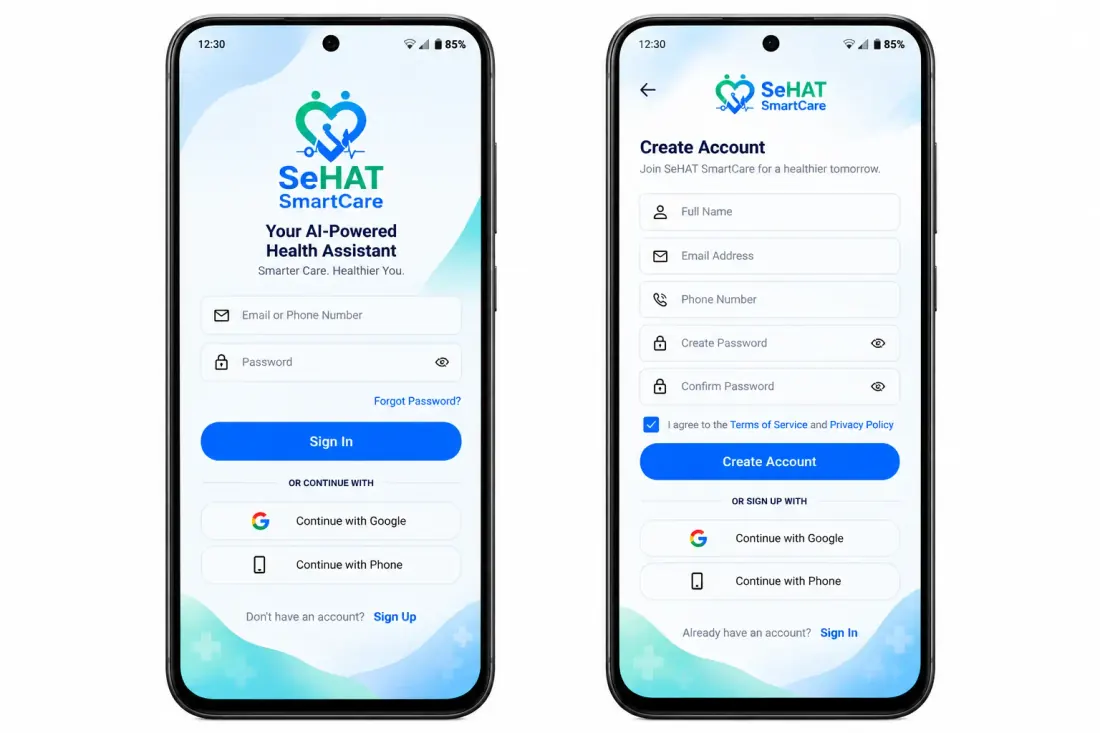
Figure 4: Secure User Authentication and Multi-lingual Profile Management.
Voice Architecture
- Speech-to-Text Layer: Uses Android’s native
SpeechRecognizerAPI configured for English (en-IN) and Hindi (hi-IN). - Mixed-Language Translation & Parsing: Handles natural code-mixing (Hinglish):
- “Kal raat se chest me heavy feeling ho rahi hai”
- “Blood sugar fasting 140 aayi hai, kya ye normal hai?”
- Text-to-Speech Output (Optional): Synthesizes response summaries so elderly or visually impaired users can listen to explanations.
9. Daily Health Insights & Medicine Reminders
Beyond on-demand AI consultations, continuous wellness tracking helps users manage daily health routines.
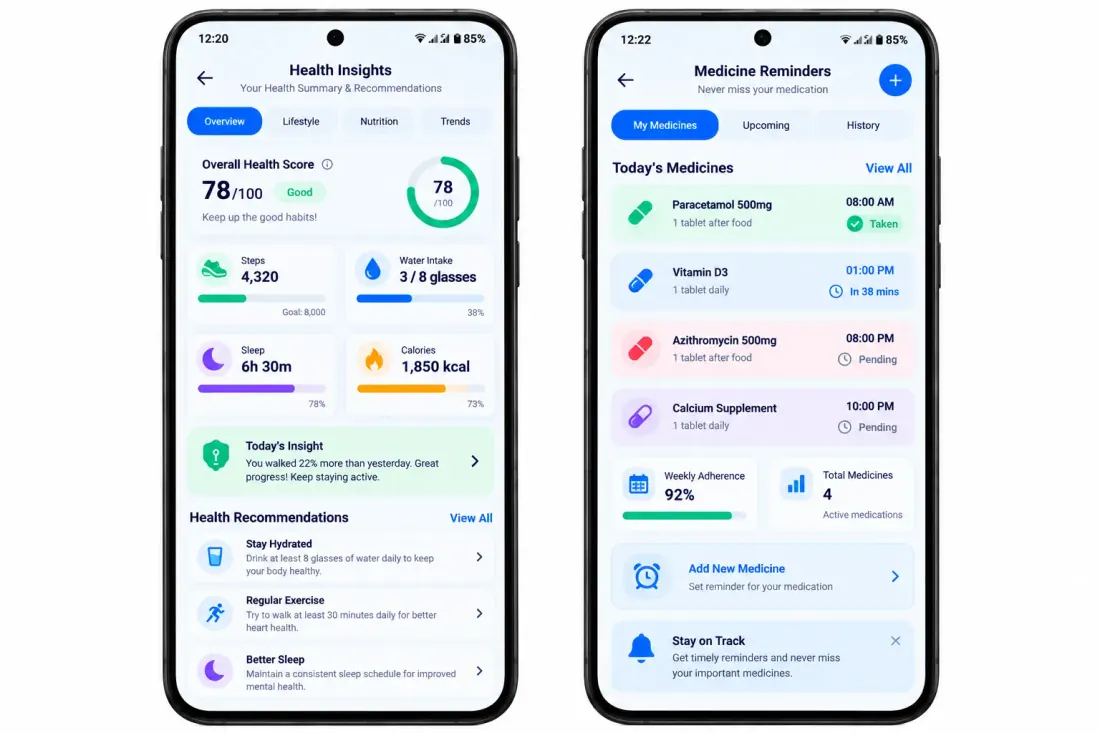
Figure 5: Daily wellness scoring metrics and scheduled medication reminder timeline.
Medicine Reminder Architecture
- Android
AlarmManagerIntegration: Operates with exact alarms (setExactAndAllowWhileIdle) to ensure alerts fire reliably even when the device is in low-power Doze mode. - Local SQLite / Room Persistence: Schedules, dosage frequencies, and adherence logs remain stored on-device, functioning seamlessly offline.
- Adherence Tracking: Tracks whether doses were taken or skipped to provide weekly adherence summaries.
10. Emergency SOS & Health Tips
During sudden medical distress, every second counts. SeHAT SmartCare incorporates a dedicated emergency workflow.
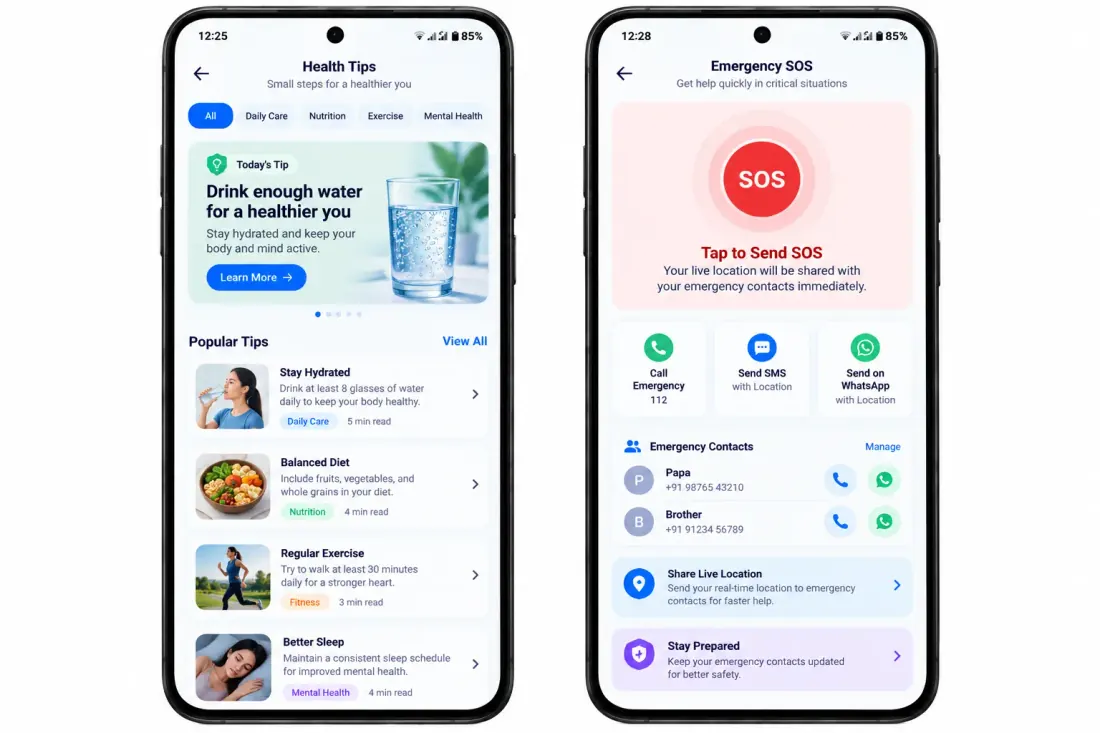
Figure 6: Emergency SOS one-tap alert dispatch with GPS coordinates and lifestyle health tips.
Emergency Protocol
- One-Tap Dialing: Direct quick-dial trigger for 112 (India’s Unified Emergency Number).
- Automated Location Capture: Retrieves the device’s precise latitude and longitude via Android
FusedLocationProviderClient. - Multi-Channel Alert Dispatch: Formats pre-configured SMS and WhatsApp messages with a direct Google Maps location pin and transmits them to designated emergency contacts.
11. Full-Stack System Architecture
SeHAT SmartCare separates mobile UI presentation, high-intensity AI computation, and cloud data persistence into a modular three-tier architecture:
┌────────────────────────────────────────────────────────────────────────┐
│                        NATIVE ANDROID LAYER                            │
│                     (Kotlin • Jetpack • Room)                          │
├────────────────────────────────────────────────────────────────────────┤
│ • Authentication Views   • Symptom Input Form    • Camera/Gallery OCR  │
│ • Chatbot Message Thread • Medicine Reminders    • SOS Dispatch Engine │
└───────────────────────────────────┬────────────────────────────────────┘
                                    │ HTTPS / REST (JSON)
                                    ▼
┌────────────────────────────────────────────────────────────────────────┐
│                      PYTHON & FASTAPI AI BACKEND                       │
│                     (Hosted on Hugging Face Spaces)                    │
├────────────────────────────────────────────────────────────────────────┤
│ • FastAPI Async Routers       • Text Normalization & Tokenization      │
│ • OCR Image Pipeline (Tesseract) • all-MiniLM-L6-v2 Embeddings         │
│ • FAISS Vector Similarity Engine • RAG Prompt Orchestrator             │
│ • II-Medical-8B Model Inference API                                    │
└───────────────────────────────────┬────────────────────────────────────┘
                                    │ Cloud I/O
                                    ▼
┌────────────────────────────────────────────────────────────────────────┐
│                       CLOUD SERVICES & STORAGE                         │
├────────────────────────────────────────────────────────────────────────┤
│ • Firebase Auth (User Identity)     • Firestore (Sync & History)       │
│ • Cloudinary (Report Asset Storage) • Hugging Face Model Hub           │
└────────────────────────────────────────────────────────────────────────┘
This decoupled design ensures the native Android app stays lightweight, responsive, and battery-friendly, offloading computationally heavy embedding generation and model inference to cloud-hosted GPU infrastructure.
12. Privacy, Security & Responsible Healthcare AI
Digital healthcare applications handle sensitive personal data. Security cannot be an afterthought.
Critical Engineering Safeguards
- Data Minimization: Uploaded laboratory images are processed in-memory where feasible, extracting required parameters and avoiding indefinite storage of unredacted personal identifiers.
- End-to-End Transport Security: All mobile-to-backend communications enforce TLS 1.3 encryption.
- Compliance Alignment:
- India’s DPDP Act 2023: Requires explicit user consent, purpose limitation, and user rights to erase uploaded report history.
- WHO AI Ethics Guidance: Conforms to principles outlined in the WHO Guidance on Ethics and Governance of AI for Health, focusing on algorithmic transparency, user autonomy, and human oversight.
- Google Play Health Content & Services Policy: Adheres to Google Play developer guidelines regarding medical disclosures, privacy policies, and non-diagnostic disclaimers.
13. Scope, Limitations & Ethical Boundaries
A transparent healthcare technology project must state its limitations clearly.
What SeHAT SmartCare Is Designed To Do:
- Provide plain-language explanations of medical terms and laboratory values.
- Offer educational symptom matching to guide doctor conversations.
- Facilitate medication adherence and emergency family communication.
What SeHAT SmartCare Does NOT Do:
- It does NOT provide medical diagnoses.
- It does NOT prescribe medications, dosages, or treatment courses.
- It does NOT replace emergency medical services or clinical doctors.
- It does NOT guarantee 100% OCR extraction accuracy on damaged or handwritten documents.
14. Project Resources & Official Repositories
Explore the code, architecture, and live project documentation:
- InfoHQ Project Showcase: View SeHAT SmartCare Showcase on InfoHQ
- Public GitHub Documentation: Explore GitHub Repository (tiwariji7/SeHAT-SmartCare)
- Medical Model Details: II-Medical-8B on Hugging Face
- Vector Search Library: FAISS Documentation (Meta AI)
Conclusion: Engineering Responsible AI for Real-World Impact
SeHAT SmartCare AI demonstrates how native Android engineering, specialized medical language models, Retrieval-Augmented Generation, and vector search can converge into a meaningful, accessible mobile product.
By combining semantic symptom matching, OCR report assistance, multilingual voice interfaces, and critical safety boundaries, the application showcases how technology can make complex medical information easier to understand for everyday users.
Building an AI-Powered Mobile or Web Platform?
At InfoHQ, we engineer production-ready AI systems, custom mobile applications, enterprise RAG platforms, and automated workflow pipelines. Whether you are developing a digital health prototype, an enterprise knowledge base, or a scalable SaaS platform, our engineering team brings technical precision and domain architecture to your project.